How much salt do people with POTS need?
Most people with Postural Orthostatic Tachycardia Syndrome (POTS) are advised by their healthcare providers to consume 3,000 to 10,000mg of salt per day, along with increased fluid intake.
Higher sodium intake helps expand blood volume and improve circulation, which can reduce POTS symptoms like dizziness, fatigue, and rapid heart rate when standing.
What to know about salt and POTS
- Most doctors recommend 3,000 to 10,000mg of salt per day for POTS patients
- 1 gram of salt ≈ 400mg of sodium
- Sodium should be paired with adequate fluid intake (typically 2–3 liters per day)
- Increasing sodium helps expand blood volume and improve circulation
- Always talk to your healthcare provider before making dietary changes
Why do people with POTS need more salt?
People with POTS are often advised to increase their salt intake because higher sodium levels help expand blood volume and improve circulation, which can reduce POTS symptoms like dizziness, fatigue, and rapid heart rate when standing.
A 2021 study found that a high-sodium diet in people with POTS increased blood volume, lowered standing norepinephrine levels, and reduced standing heart rate.
POTS is a form of dysautonomia, meaning the autonomic nervous system (ANS) does not regulate "automatic" functions like heart rate and blood pressure properly. When standing, blood can pool in the lower body instead of circulating effectively, reducing blood flow to the brain.
This contributes to symptoms such as:
- Tachycardia
- Blood pressure changes
- Fatigue
- Dizziness or lightheadedness
- Gastrointestinal symptoms
Increasing sodium helps the body retain fluid and support blood volume, improving circulation and helping reduce symptom severity.
In short, sodium helps people with POTS hold onto fluid, increase blood volume, and stabilize circulation when upright.
What’s the difference between salt and sodium?
Salt and sodium are not the same thing, and this distinction matters when following POTS recommendations.
- Salt (sodium chloride) is the compound found in table salt
- Sodium is the active component that affects fluid balance and blood volume
One gram (1,000mg) of salt is about 400mg of sodium.
Salt to Sodium Conversion Table for POTS*
| Salt (grams) | Salt (teaspoons) | Sodium (mg) |
|---|---|---|
| 1g or 1,000mg | ~0.2 tsp | 400 mg |
| 2g or 2,000mg | ~0.4 tsp | 800 mg |
| 3g or 3,000mg | ~0.6 tsp | 1,200 mg |
| 5g or 5,000mg | ~1 tsp | 2,000 mg |
| 7.5g or 7,500mg | ~1.5 tsp | 3,000 mg |
| 10g or 10,000mg | ~2 tsp | 4,000 mg |
*Conversions are approximate and may vary slightly depending on the type and density of salt.
How can people with POTS increase sodium intake?
People with POTS can increase sodium intake through a combination of supplements, foods, and fluids.
Electrolyte products
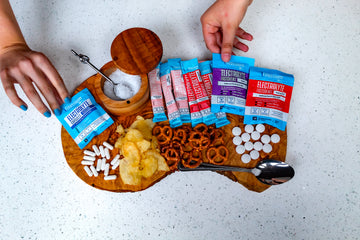
Electrolyte supplements such as capsules, chewable tablets, or drink mixes provide measured, consistent amounts of sodium and are often easier to tolerate than relying on food alone.
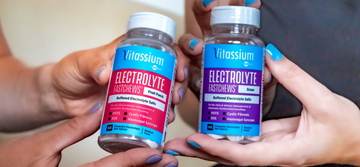
Some products are specifically designed for people with conditions like POTS. For example, electrolyte capsules and chewable tablets like Vitassium are formulated to provide higher amounts of sodium in forms that are easy to take throughout the day.
Table salt
Some clinicians recommend a “teaspoon approach”:
- Measure out ~2 teaspoons of salt at the start of the day
- Add it to meals or drinks throughout the day
High sodium foods
- Canned foods like ramen, beans, vegetables, chicken, or tuna
- Jerky
- Bacon or deli meats
- Cheese
- Bread or bagels
- Chips, pretzels, crackers, or popcorn
- Salted nuts or seeds
- Pickles or olives
- Sauces like soy sauce, pasta sauce, or dressings
- Dips like salsa, pesto, or peanut butter
High sodium beverages
- Broth or stock
- Tomato or vegetable juice
- Pickle juice
IV fluids
In some cases, healthcare providers may recommend IV saline if it’s difficult to maintain adequate sodium and fluid intake through diet alone.
What’s the best way to get sodium for POTS?
The best source of sodium for POTS is the one you can consistently tolerate and use throughout the day.
Some people prefer capsules or chewable tablets because they provide measured, consistent doses of sodium without requiring large volumes of fluid or strongly flavored drinks.
Should people with hyperadrenergic POTS increase their sodium intake?
People with hyperadrenergic POTS may still benefit from increased sodium intake, but it depends on the individual and should be guided by a healthcare provider.
Hyperadrenergic POTS is a subtype associated with an increase in diastolic blood pressure upon standing, along with elevated heart rate.
A 2021 study found that a high-sodium diet in people with POTS increased blood volume and improved key markers of POTS symptoms, including in those with the hyperadrenergic subtype.
However, conditions like hypertension (high blood pressure) are often a contraindication for high sodium intake, and long-term research in POTS is limited. Because of this, sodium recommendations should be individualized and medically guided.
What factors affect how much salt someone with POTS needs?
Sodium needs can vary significantly depending on your body and circumstances. Your healthcare provider may recommend increasing sodium intake during:
- Symptom flares
- Heat exposure or sweating
- Illness or dehydration
- Menstrual cycle or hormonal changes
- Increased physical activity
- Medication changes
Can people with POTS have too much salt?
There is currently limited research on the long-term effects of high sodium intake in people with POTS.
However, high sodium intake may not be appropriate for people with certain conditions, like:
- Hypertension (high blood pressure)
- Kidney disease
- Heart disease
Because sodium needs vary widely, it’s important to work with a healthcare provider to determine what’s safe and effective for you.
FAQs
How much water should people with POTS drink?
Most healthcare providers recommend 2 to 3 liters of fluid per day, alongside increased sodium intake.
Sodium and fluid work together — sodium helps the body retain the fluid needed to expand blood volume.
What supplements are recommended for POTS?
There is no single supplement plan for POTS, but providers may recommend:
- Electrolyte supplements high in sodium
- Additional supplements based on individual needs
Some electrolyte products are specifically designed for people with POTS and other forms of dysautonomia. For example, Vitassium offers electrolyte capsules and chewable tablets designed to help people increase sodium intake more easily throughout the day.
Treatment is highly individualized, so it’s important to work with your healthcare team.
How is POTS treated?
There are currently no FDA-approved treatments specifically for POTS, but providers may prescribe medications off-label to help manage symptoms like high heart rate, changes in blood pressure, and fatigue.
POTS symptoms are most commonly managed through lifestyle changes like:
- Increasing sodium and fluid intake
- Wearing compression garments
- Using mobility aids and other tools like a shower chair
- Doing physical therapy or occupational therapy
- Avoiding triggers when possible like prolonged standing or heat
Key takeaway
Most people with POTS are advised to have 3,000 to 10,000mg of salt per day, along with adequate fluid intake, to help expand blood volume and reduce symptoms.
Because sodium needs vary widely based on symptoms, environment, and underlying conditions, the right amount should always be determined with a healthcare provider.